
Field Learning at Chorvoq
Bridging Knowledge and Practice for a Greener Future
The National University of Uzbekistan (NUUz) continues to strengthen its commitment to sustainability by combining classroom learning with hands-on environmental practice. As part of this initiative, students are regularly sent to farming zones, nature reserves, and field stations to study real-world environmental systems, sustainable agriculture, and soil conservation methods.
This approach benefits both students and local communities: while farmers gain insights into scientifically proven methods of sustainable resource management, students develop a deeper understanding of how to preserve natural ecosystems and use land responsibly. The collaboration fosters shared learning and encourages innovation in environmental protection, agriculture, and water management.
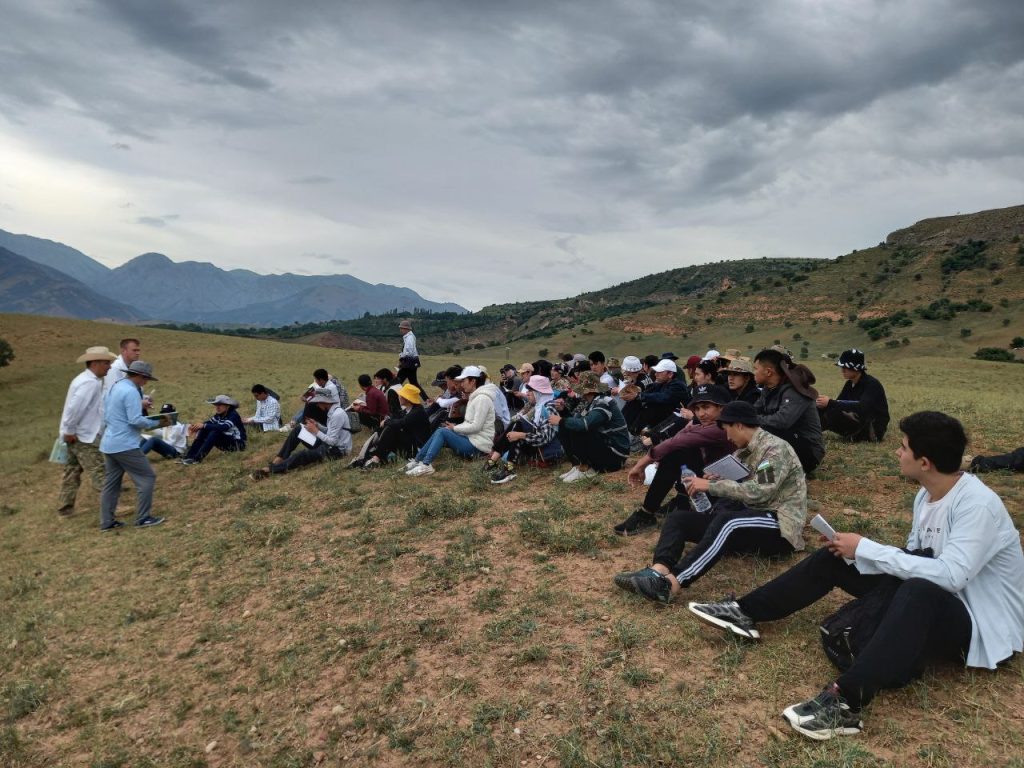
🗺🌍 On the second day of the field practice, students of the Faculty of Geography and Natural Resources, majoring in Geography, conducted practical research along the Ugam–Piskom–Chotqol River Watershed route — one of Uzbekistan’s most ecologically and geologically significant regions.
🔹 Purpose of the Route:
To provide students with field-based geographic knowledge about ancient and old landslides, Neogene-period rock formations, Quaternary conglomerates, and the streams that form the source of the Chirchiq River.
During their expedition, students observed land formations, water systems, and soil structures shaped by natural processes over millions of years. Professors guided them through analyzing environmental changes and discussing ways to balance human activity with the preservation of natural landscapes.
NUUz’s field programs are designed not only to build scientific skills but also to cultivate environmental ethics and sustainability awareness.
Through direct interaction with farmers and field experts, students learn about:
Sustainable farming and irrigation techniques that reduce water and soil loss.
Methods of soil enrichment through organic composting and reduced chemical use.
The importance of land management practices that prevent erosion and maintain biodiversity.
Such experiences allow students to apply theory to practice, transforming sustainability from an academic concept into a lived responsibility.

A Shared Vision for Sustainable Development
By sending students into agricultural and environmental field sites, the National University of Uzbekistan contributes directly to the country’s Sustainable Development Goals (SDG 2 – Zero Hunger, SDG 6 – Clean Water and Sanitation, and SDG 15 – Life on Land).
The Chorvoq field practice illustrates how academia and local communities can collaborate to promote responsible natural resource management, scientific learning, and environmental stewardship.
Through these initiatives, NUUz continues to prepare the next generation of environmental leaders — young professionals equipped not only with knowledge but also with the practical wisdom to protect Uzbekistan’s natural heritage and build a sustainable future for all.