A New Chapter with Renmin University
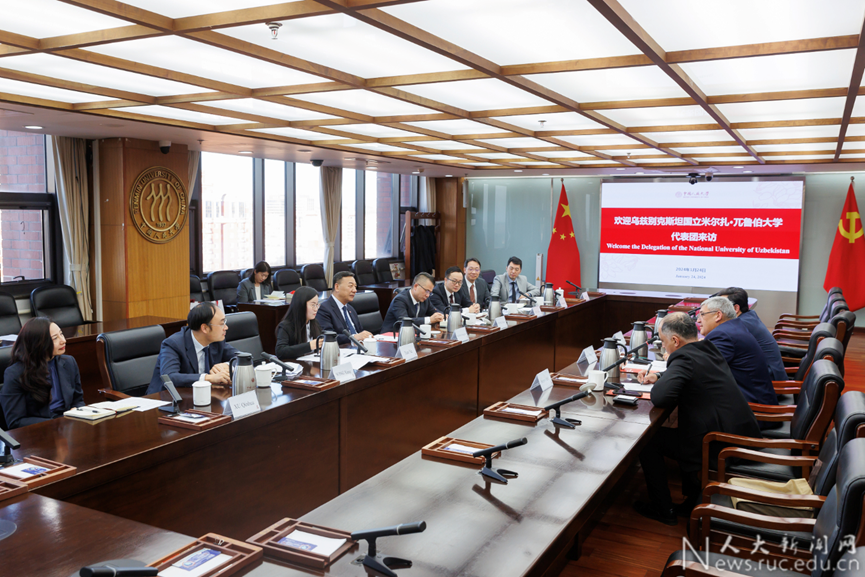
In an era where scientific advancement and high‐technology development are at the core of national progress, the collaboration between the National University of Uzbekistan and Renmin University of China is entering a new, exciting phase. Building on prior exchange agreements, both sides are now committed to launching data‐driven scientific partnerships in the fields of semiconductors and physical sciences.
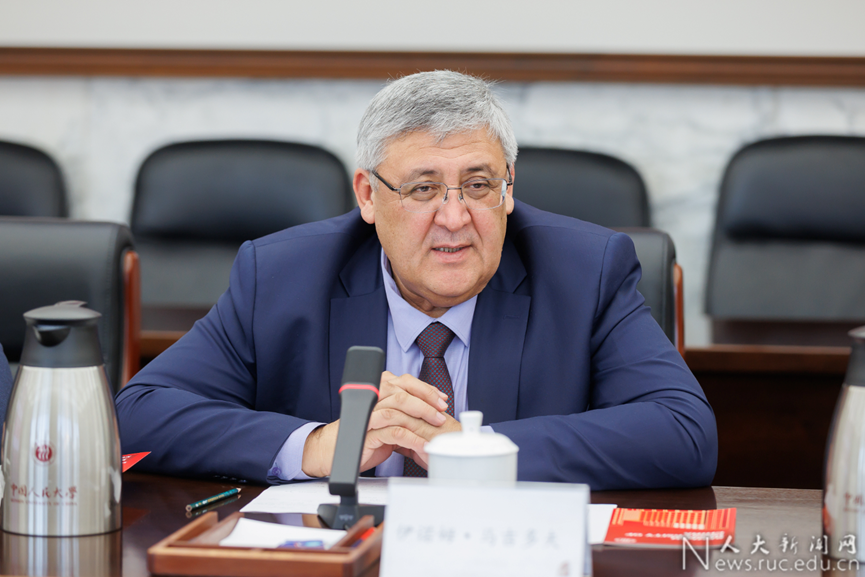
During a recent visit, the NUU delegation led by Prof. Inom Madjidov was warmly welcomed by Prof. Zhang Donggang, Chairman of the University Council of Renmin University of China. Prof. Zhang introduced the history and development of RUC, emphasizing that both RUC and NUU are committed to the advancement of national education and the cultivation of high-level talents. He highlighted that the two universities established the “Belt and Road” and “New Uzbekistan” Development Strategy Coordination Research Center in October 2023, through which they have already carried out fruitful cooperation in multiple fields.
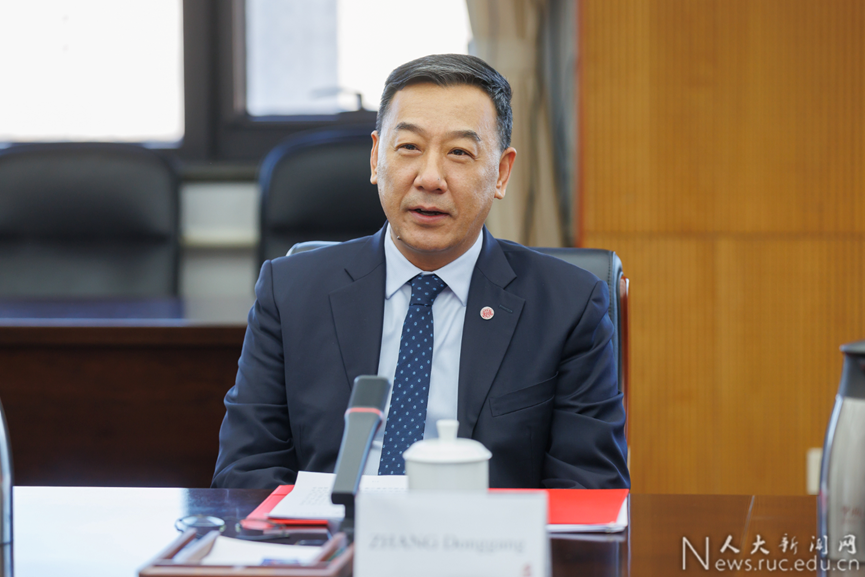
Prof. Zhang further expressed hope that both sides would jointly strengthen the cooperation research center and fully leverage the strengths of faculty and students to conduct academic and policy research on major issues of common concern to China and Uzbekistan. He underscored that this cooperation should also provide a strong foundation for cultural exchange, mutual learning, and regional studies in Central Asia.
As part of this new stage of cooperation, the two universities are working to establish joint virtual data labs that will enable faculty members and researchers to share curated datasets on semiconductor physics, nanomaterials, and experimental research in the physical sciences. By sharing both raw and processed data (under strict confidentiality and IP agreements), they aim to:
Accelerate comparative materials research (e.g., doping profiles, crystal growth, interface defects)
Enhance cross‐validation of experimental results, ensuring reproducibility across laboratories
Advance modeling and simulation studies through the integration of datasets from both institutions
Regular data workshops and joint hackathons will complement this infrastructure, creating new opportunities for students and researchers to analyze datasets together and spark innovative projects.
To strengthen collaboration, both universities plan to establish seed grants for bilateral research teams working in semiconductors, physical sciences, and quantum technologies. Training initiatives will include faculty and student exchanges, particularly for data scientists, computational physicists, and semiconductor engineers, fostering capacity building and knowledge transfer across institutions.
Both sides also agreed to co-host an annual “Data in Physical Sciences & Semiconductor Engineering” symposium, with participation from scholars, industry experts, and PhD candidates. By adhering to FAIR principles (Findable, Accessible, Interoperable, Reusable), the universities reaffirm their commitment to responsible and open scientific collaboration.
The visit of the NUU delegation, warmly received by Prof. Zhang Donggang, marked an important milestone in strengthening ties between Uzbekistan and China. Together, NUU and RUC are not only expanding their cooperation in semiconductor and physical sciences but also deepening their role in fostering academic exchange, cultural understanding, and regional integration.