
Inclusive Education: Opportunities, Challenges, and Development Prospects
On December 22, 2025, a public hearing titled “Inclusive Environment in the Education System: Opportunities and Barriers for Persons with Disabilities” was held at the Ministry of Higher Education, Science and Innovation in Tashkent.
The event brought together officials of the ministry, members of the Public Council, representatives of civil society institutions, specialists from higher and vocational education institutions, students, and media representatives.
The hearing was opened by the Minister of Higher Education, Science and Innovation, Qo‘ng‘irotboy Sharipov, who delivered the welcoming remarks. In his speech, he highlighted the major achievements in the field of higher education and science throughout 2025, particularly the implementation of the assignments given by the President, the Presidential Administration, and the Cabinet of Ministers.
It was noted that as of December 2025, the ministry had been assigned a total of 966 tasks, of which 714 (73.9%) have been fully completed. Out of 612 key assignments, 475 (77.6%) have been implemented, while the remaining tasks are currently in progress. At the same time, it was emphasized that all normative and legal documents adopted by the ministry are being systematically analyzed for compliance with anti-monopoly legislation.
Qo‘ng‘irotboy Sharipov underlined that creating an inclusive environment in education and ensuring the right of persons with disabilities to access education are among the top priorities of state policy in Uzbekistan.
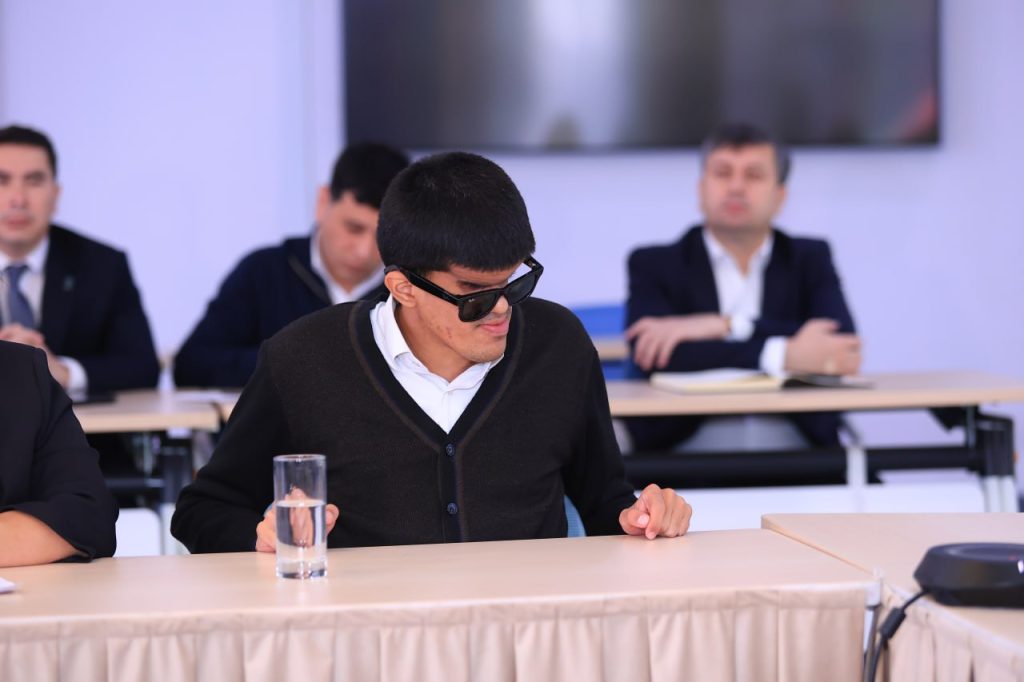
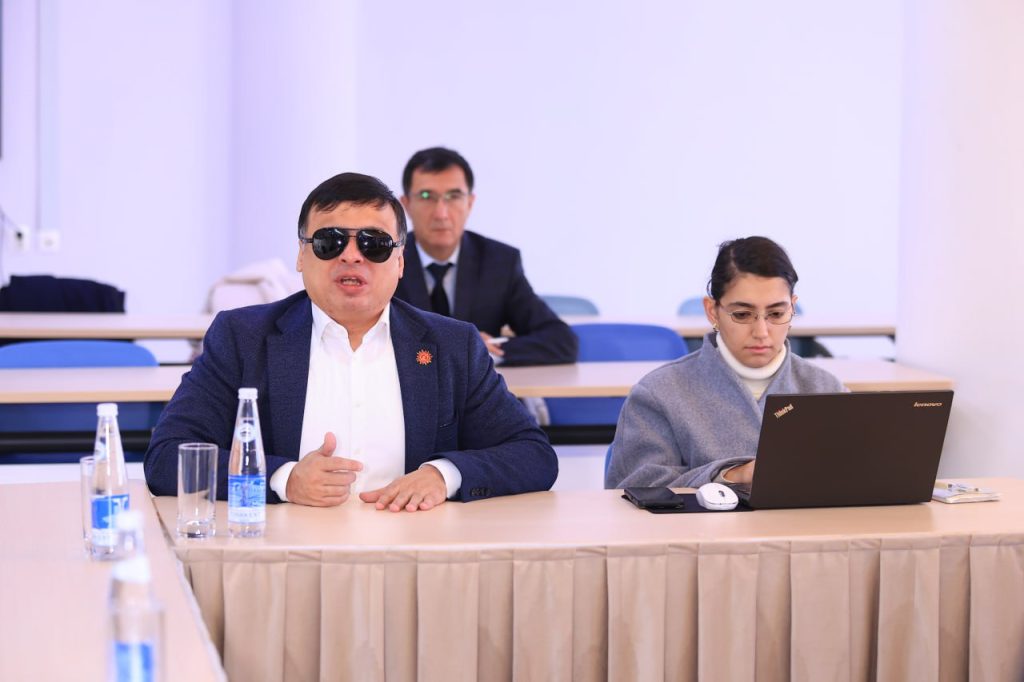
According to statistical data, in 2025, a total of 3,907 additional state grant quotas were allocated for applicants with Group I–II disabilities, and 3,258 young people were recommended for admission to higher education institutions. It was also noted that special entrance examinations were organized for visually impaired applicants, and the foreign language certificate requirement was waived for certain categories of citizens applying for master’s degree programs. These measures were recognized as important steps toward the development of inclusive education in Uzbekistan.
During the event, representatives of the Uzbekistan Association of Persons with Disabilities, as well as students and researchers, presented specific proposals and recommendations regarding the practice of inclusive education, existing challenges, and ways to overcome them. The discussions highlighted several key areas, including the modernization of higher education infrastructure based on inclusive requirements, the adaptation of student dormitories, the training of qualified specialists, and the wider integration of digital technologies into the educational process.