
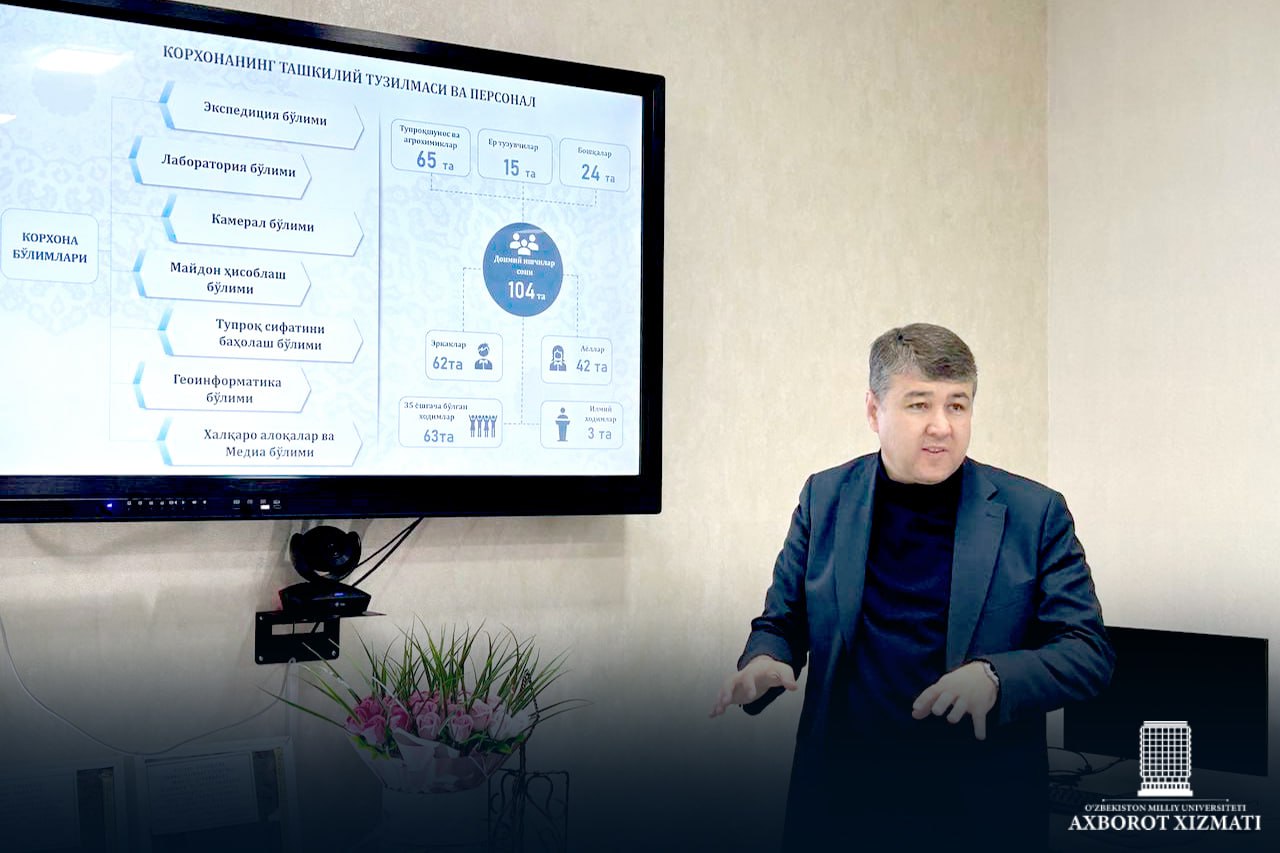


On March 13 of this year, a delegation from the National University of Uzbekistan, led by Vice-Rector for Academic Affairs Shuhrat Toshmatov, paid an official visit to the “Tuproqsifattahlil” State Unitary Enterprise. The primary aim of the visit was to strengthen scientific and practical collaboration, enhance the quality of education through the integration of modern technologies, and foster closer cooperation in applied research.
During the visit, the delegation was given a comprehensive tour of the company’s state-of-the-art soil analysis laboratory, which is equipped with advanced instruments and technology. The laboratory conducts detailed analyses of over 100 soil samples and more than 15 water samples in strict accordance with international standards. Its work plays a crucial role in supporting Uzbekistan’s agricultural development and environmental management, providing scientifically grounded recommendations and contributing to the sustainable use of natural resources.
In addition, discussions were held regarding the company’s ongoing international collaborations, knowledge-sharing initiatives, and programs aimed at building staff capacity. Both parties explored opportunities to organize practical trainings, seminars, and hands-on practice days for students and young professionals, establishing a structured partnership between the university and the enterprise. This initiative is designed to strengthen scientific and technological capabilities, provide practical experience, and ensure that students and young specialists can effectively apply modern technologies in real-world professional environments.
The visit highlighted the shared commitment of the National University of Uzbekistan and “Tuproqsifattahlil” to advancing applied research, fostering innovation, and preparing a new generation of highly skilled professionals who can contribute to the country’s agricultural and environmental development.