
Collaboration between the National University of Uzbekistan and the Space Research Agency in the fields of aerospace and geoinformatics
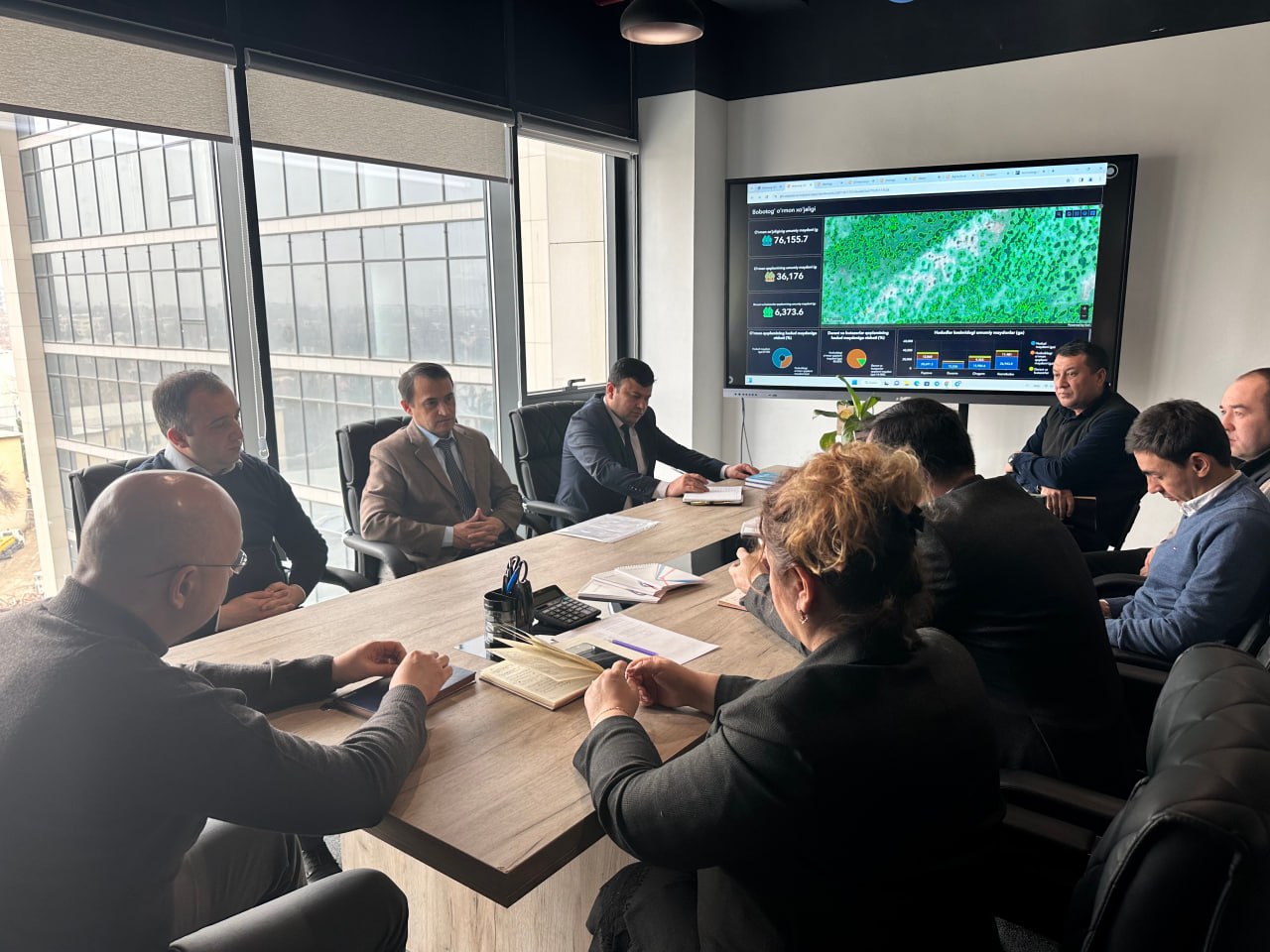
The director of the “Aerospace Research Center,” recently established at the National University of Uzbekistan, together with professors from the Department of Geodesy and Geoinformatics at the Faculty of Geography and Geoinformation Systems, held a significant meeting with the leadership of the Space Monitoring and Geoinformation Technologies Center, which operates under the Space Research and Technologies Agency of the Ministry of Digital Technologies.
During the meeting, both parties engaged in detailed discussions aimed at strengthening and deepening scientific and applied research. They explored opportunities to implement joint projects in the near and long-term future, with a particular focus on advancing collaboration in the rapidly developing fields of space research and geoinformatics. Concrete plans were outlined for the National University of Uzbekistan and the Space Research Agency to carry out collaborative scientific and practical projects, translate research outcomes into real-world applications, and leverage modern technologies effectively to address contemporary challenges.
A key point of discussion was the training of specialists at an international level, ensuring that future experts are equipped with cutting-edge knowledge and practical skills. Both sides also emphasized the importance of facilitating the exchange of scientific expertise, fostering innovation, and creating a framework for ongoing collaboration between academia and government space agencies.
The meeting concluded with a focus on preparing a memorandum of understanding and subsequent formal agreements designed to expand scientific cooperation in geoinformatics and aerospace research. These agreements are expected to not only advance scientific research and the implementation of innovative projects but also strengthen the development of a highly skilled workforce capable of contributing to national and international scientific and technological progress.
