
Improving Uzbekistan’s Food Security
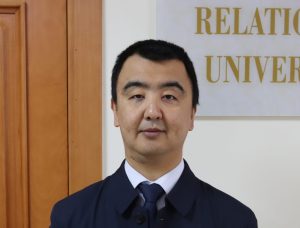
Author: Ulugbek Narmanov, PhD, National University of Uzbekistan
Introduction
In recent years, food security has become a national priority in Uzbekistan’s economic policy. The government’s focus on agricultural modernization, resource efficiency, and market diversification reflects a comprehensive approach to ensuring food availability and affordability for all citizens. Within this framework, the circular economy—a system that minimizes waste and maximizes resource reuse—plays an increasingly important role.
The transition to a circular economy in agriculture allows Uzbekistan to address critical issues such as soil degradation, water scarcity, and post-harvest losses, while improving productivity and sustainability. Through efficient use of natural resources and recycling of agricultural by-products, the country is moving toward a model that ensures both environmental protection and food system stability.
The Role of Agriculture in Economic Development
Agriculture in Uzbekistan continues to serve as a cornerstone of the national economy, employing a significant share of the population and generating a substantial portion of export revenues. Increasing the production and export potential of this sector has a direct impact on:
Enhancing rural livelihoods and reducing poverty;
Ensuring stable economic growth and consumer market balance;
Promoting sustainable production and resource management practices.
Government initiatives to strengthen agro-industrial integration and support local producers have laid the groundwork for a more competitive and diversified agricultural sector.