
Liberal Democratic Party of Uzbekistan: Supporting Clean Energy Policy Through Education and Mentorship
On the occasion of October 1 – Teachers’ and Mentors’ Day, the National University of Uzbekistan hosted a meaningful round table discussion titled “Teachers and Mentors – the Foundation of Development, Builders of the Future.” The event was organized in close cooperation with the Liberal Democratic Party of Uzbekistan and highlighted the crucial role of educators in building an innovative, sustainable, and energy-efficient future for the country.
The event gathered leading figures, including Professor Inom Madjidov, Rector of the National University of Uzbekistan; Aktam Khaitov, Chairman of the Executive Committee of the Political Council of UzLiDeP and head of the UzLiDeP faction in the Legislative Chamber of the Oliy Majlis; as well as party representatives, professors, and students.
In his address, A. Khaitov emphasized that UzLiDeP sees education and mentorship as the foundation for Uzbekistan’s progress in the green economy and Fourth Industrial Revolution. He noted that teachers and mentors play a key role in informing and supporting government efforts in clean energy and energy-efficient technology policy development, ensuring that future specialists are equipped with the knowledge and skills to implement these reforms.
Representatives of UzLiDeP discussed the party’s initiatives aimed at promoting energy conservation, renewable resources, and environmental awareness within the education system. The party actively supports collaboration between universities, research institutions, and industry partners to create a generation of professionals capable of leading innovation in solar, wind, and hydrogen energy technologies.
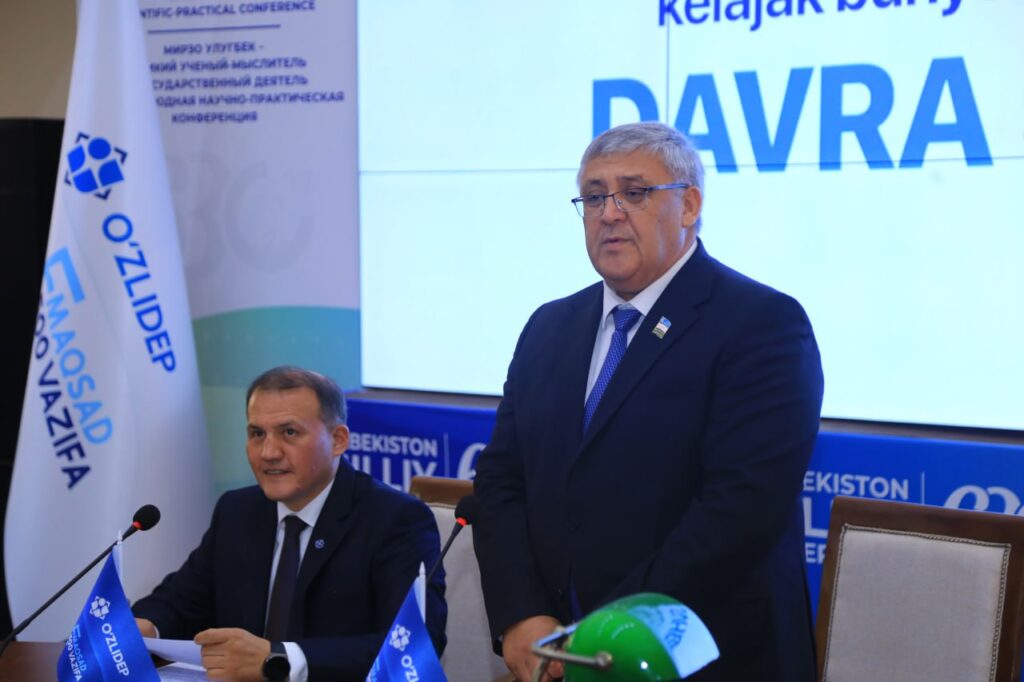
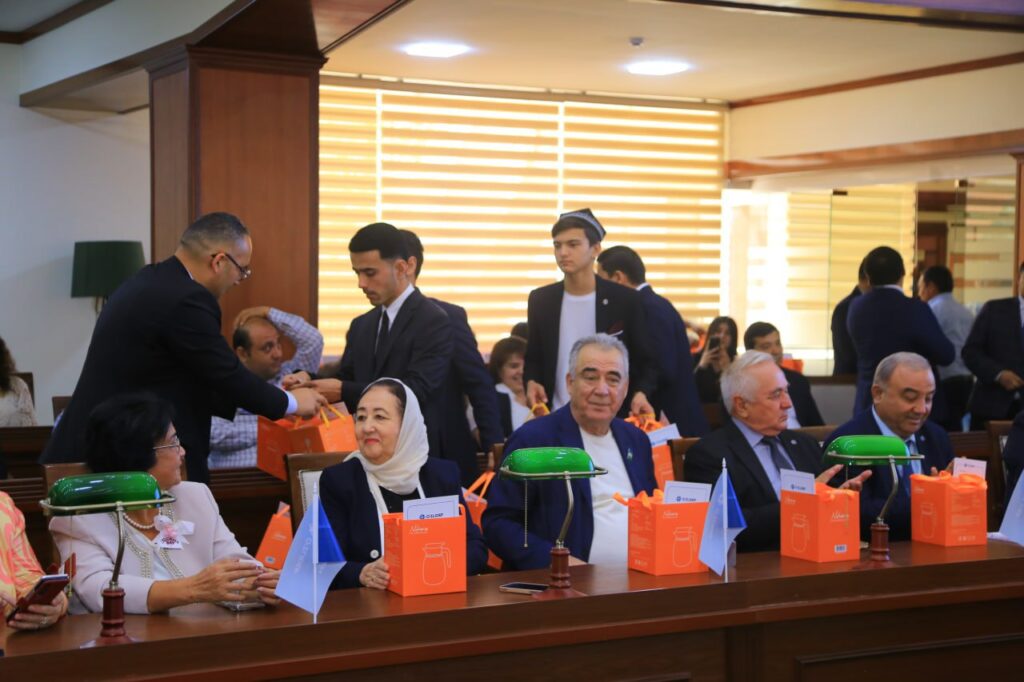
Speakers, including Professor Erkin Zakhidov and Academician Bakriddin Zaripov, highlighted that integrating sustainable development goals into higher education is a strategic priority for both the state and UzLiDeP. They stressed that modern social and economic reforms are inseparable from the transition to a low-carbon economy, which requires not only political commitment but also strong mentorship and training in science, technology, and social responsibility.Rano Rustamova, Chair of the Women’s Advisory Council of the University, underlined the role of women educators and mentors in promoting environmental education and community engagement. She noted that many young specialists trained under such mentorship are already contributing to research projects on energy efficiency and climate action.
The discussion concluded with mutual recognition of the importance of partnership between UzLiDeP and academic institutions in advancing national policies for clean energy, digital innovation, and sustainable growth. Participants agreed that the future of Uzbekistan depends not only on technological advancement but also on the commitment of teachers and mentors to guide the next generation toward responsible energy use and ecological consciousness.
At the end of the event, teachers and mentors were honored with certificates and holiday gifts in appreciation of their contribution to education, science, and the sustainable development of Uzbekistan.