
Practical Training on Emergency Response
Practical exercises were conducted at the Faculty of Biology and Ecology to equip students and staff with the necessary skills to respond effectively to emergencies such as earthquakes and fire hazards—incidents that are increasingly linked to the growing impacts of climate change.
The training involved collaboration with the Olmazor District Emergency Situations Department’s Prevention and Control Division, the university’s Civil and Labor Protection Department, faculty leadership, professors, group tutors, and students.
During the sessions, specialists emphasized the importance of preparedness to mitigate risks related to climate change-induced disasters, including fires, floods, and other hazards exacerbated by shifting environmental conditions. Informational materials were distributed, and participants received thorough explanations on preventing emergencies such as earthquakes, fires, carbon monoxide poisoning, and other potential crises.
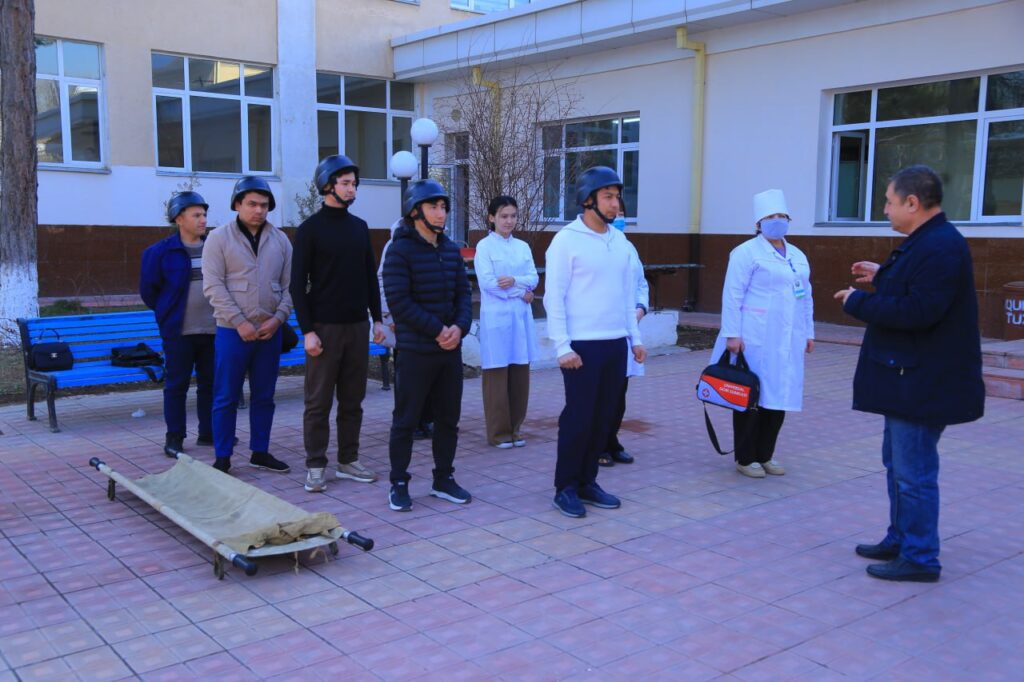
Students were trained in appropriate actions during fire and earthquake events, with four groups focusing on public order maintenance, fire safety, first aid, and rescue operations. Practical drills reinforced their ability to respond swiftly and safely in real emergency scenarios.
Evacuation teams carried out coordinated exercises involving safe and orderly evacuation of the faculty building, following detailed evacuation maps and instructions. This training aims to enhance the university community’s resilience against both traditional emergencies and those increasingly influenced by climate change, ensuring preparedness at the local and regional levels.