
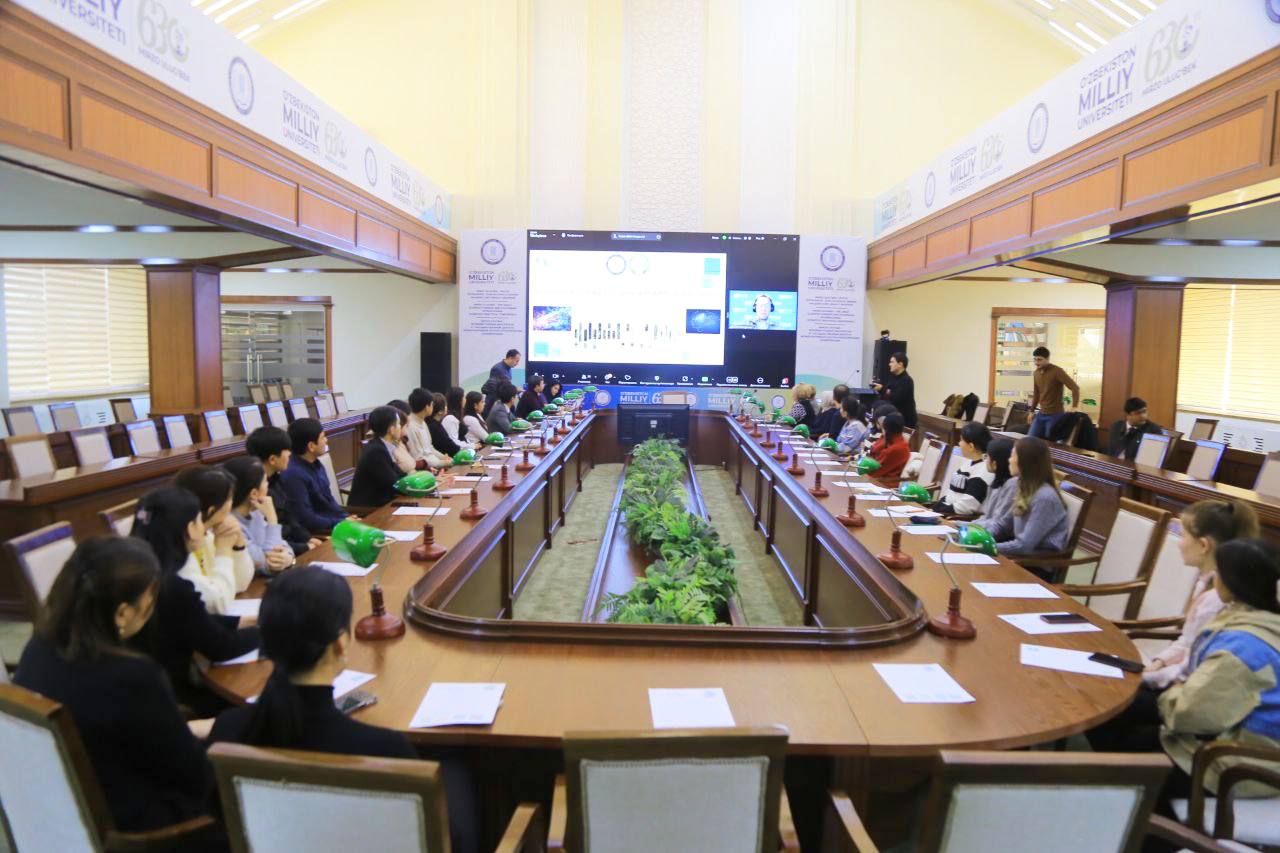

Today, december 18, the “Young Biochemists” club of the Department of Biochemistry of the Faculty of Biology and Ecology of the National University of Uzbekistan and the “NUU Public Talks” club of the Department of Strategic Development and International Ratings organized an international seminar on the topic “The role of artificial intelligence in drug discovery”.
International events play an important role in the university’s high ranking in international rankings. International seminars help to increase academic prestige and improve research performance. According to the Vice-Rector, “Such events are an important platform for developing international cooperation and further promoting our university in the global scientific community.”
Raima Shirinova
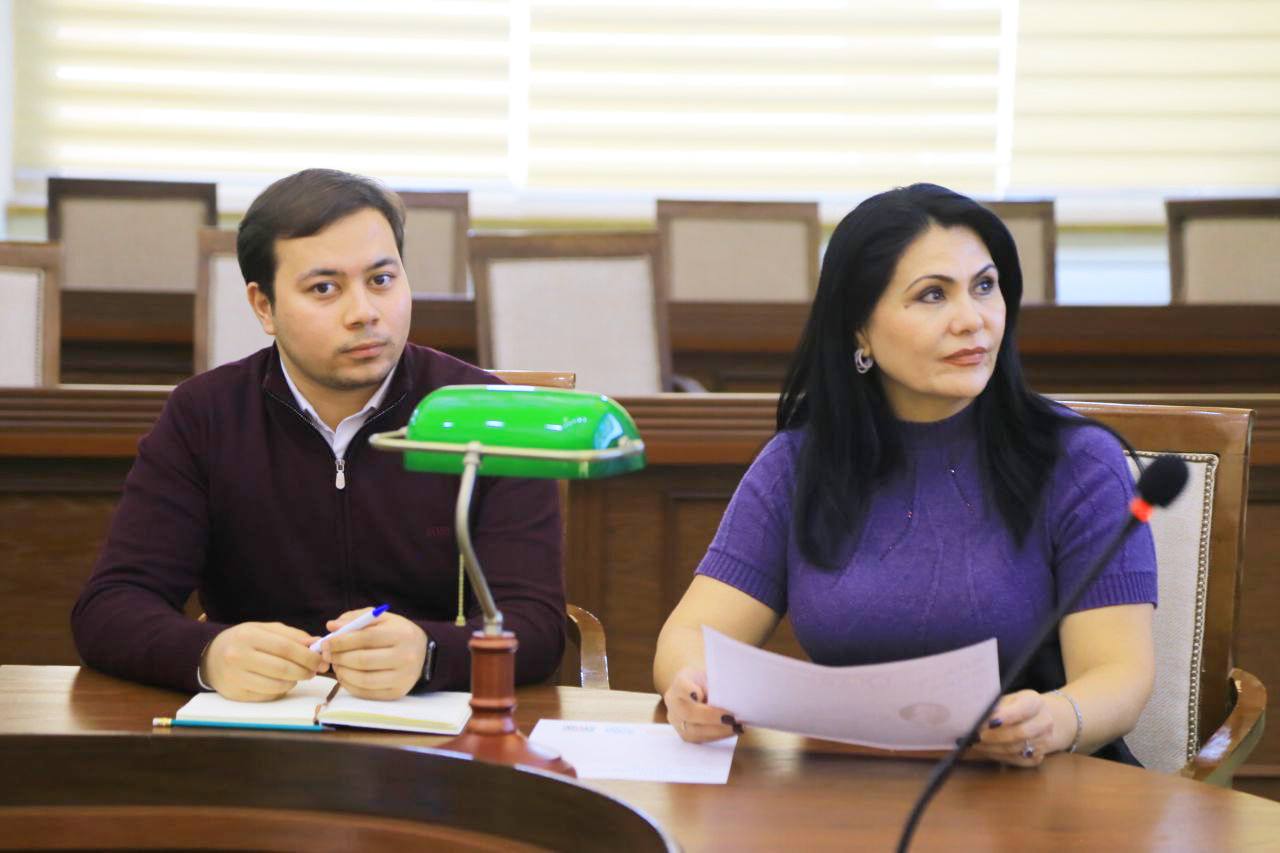
Opening the seminar, Raima Shirinova, Vice-Rector for International Relations of the National University of Uzbekistan, noted that holding such international-level seminar trainings will lead to greater recognition of the university worldwide.
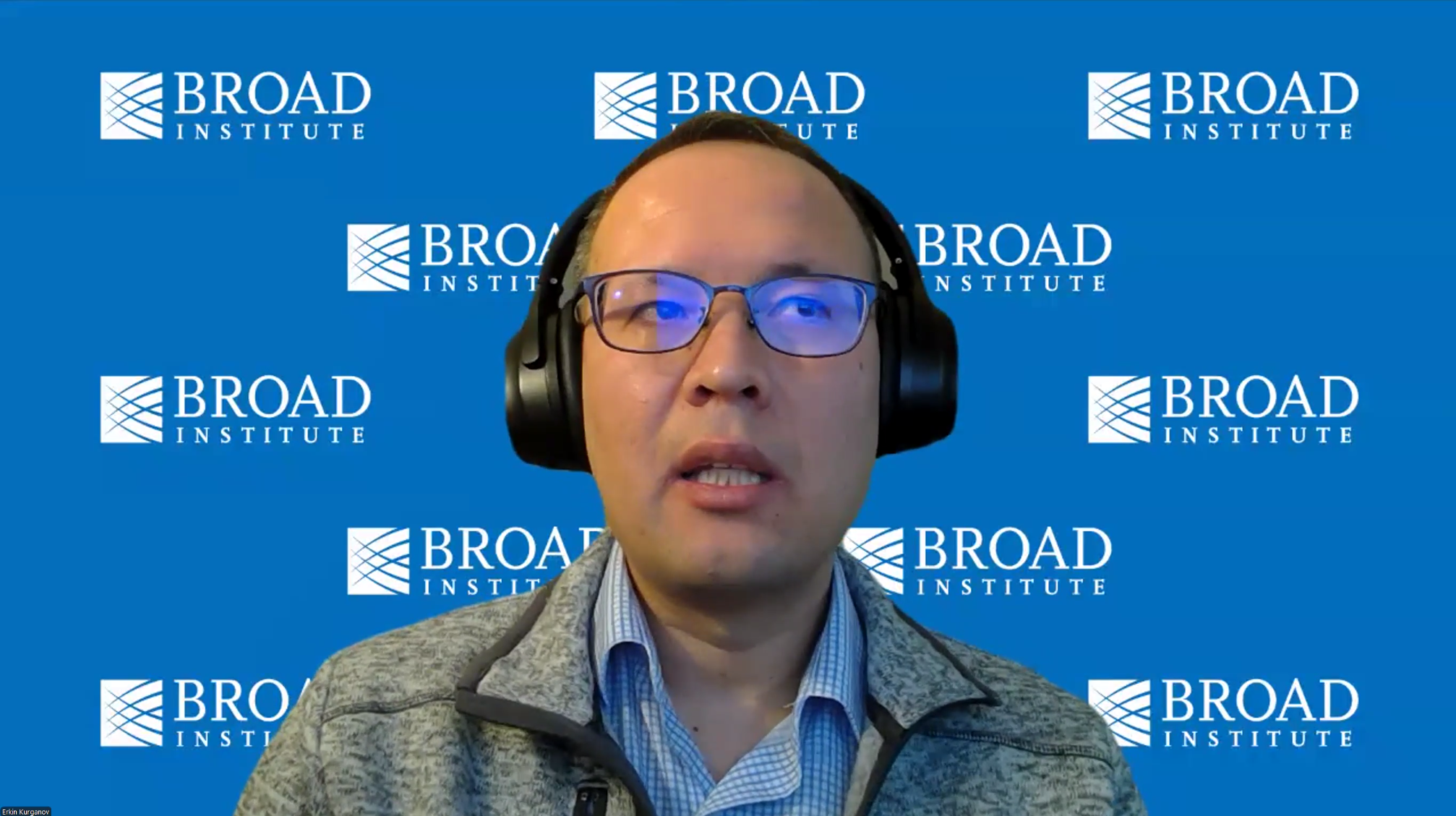
The keynote speaker of the seminar was Erkin Kurganov, PhD, a researcher at the Broad Institute of the Massachusetts Institute of Technology (MIT) and Harvard University, a member of the Neuroscience, Physiology and Biophysics Societies of Japan and the United States.
The speaker provided valuable information about the history of the development of artificial intelligence, its application in pharmaceutical research and its new opportunities in drug discovery. He explained in detail the role of artificial intelligence in analyzing complex biological data, modeling molecular processes and optimizing the process of developing new drugs.
During the seminar, special attention was paid to the following issues:
Researcher Erkin Kurganov gave examples of practical results achieved with the help of artificial intelligence in such important areas as schizophrenia. He also spoke about how artificial intelligence is expanding the possibilities for innovative approaches and new discoveries in pharmaceutical processes.
“In general, I cannot imagine the future of research without artificial intelligence. I believe that people will conduct deeper research on biomedical research, and artificial intelligence will facilitate this task with suggestions”
Erkin Kurganov
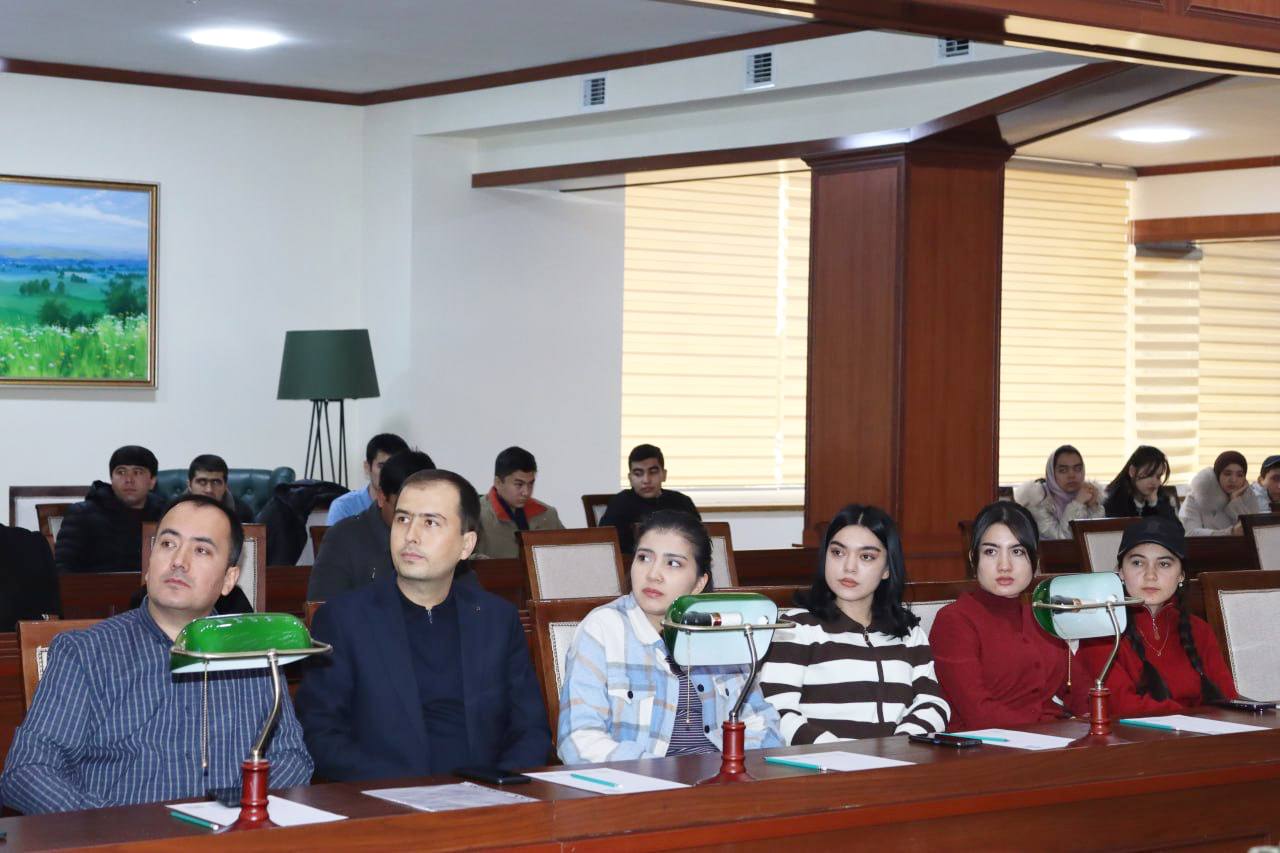
The seminar was attended by professors and teachers of the Faculty of Biology and Ecology, students, as well as students from the Institute of Biophysics and Biochemistry, the Institute of Bioorganic Chemistry, the Center for Advanced Technologies, AKFA University, TashPMI Academic Lyceum, TTA Academic Lyceum, Sirojiddinnov Academic Lyceum, and a number of schools, which work in collaboration with the Department of Biochemistry.
During the seminar, participants asked questions about the connection between artificial intelligence and pharmaceuticals, its future prospects, as well as data reliability and ethical issues. During this dialogue, the application of artificial intelligence in the pharmaceutical sector of Uzbekistan and the development of international scientific cooperation were discussed.