
Biochemistry Course
NUU's Biochemistry course provides a comprehensive understanding of macromolecules, cellular functions, and enzyme dynamics. It equips students with analytical and problem-solving skills that are crucial for the life sciences, fostering a deeper grasp of biochemical processes and their applications in research and medicine.
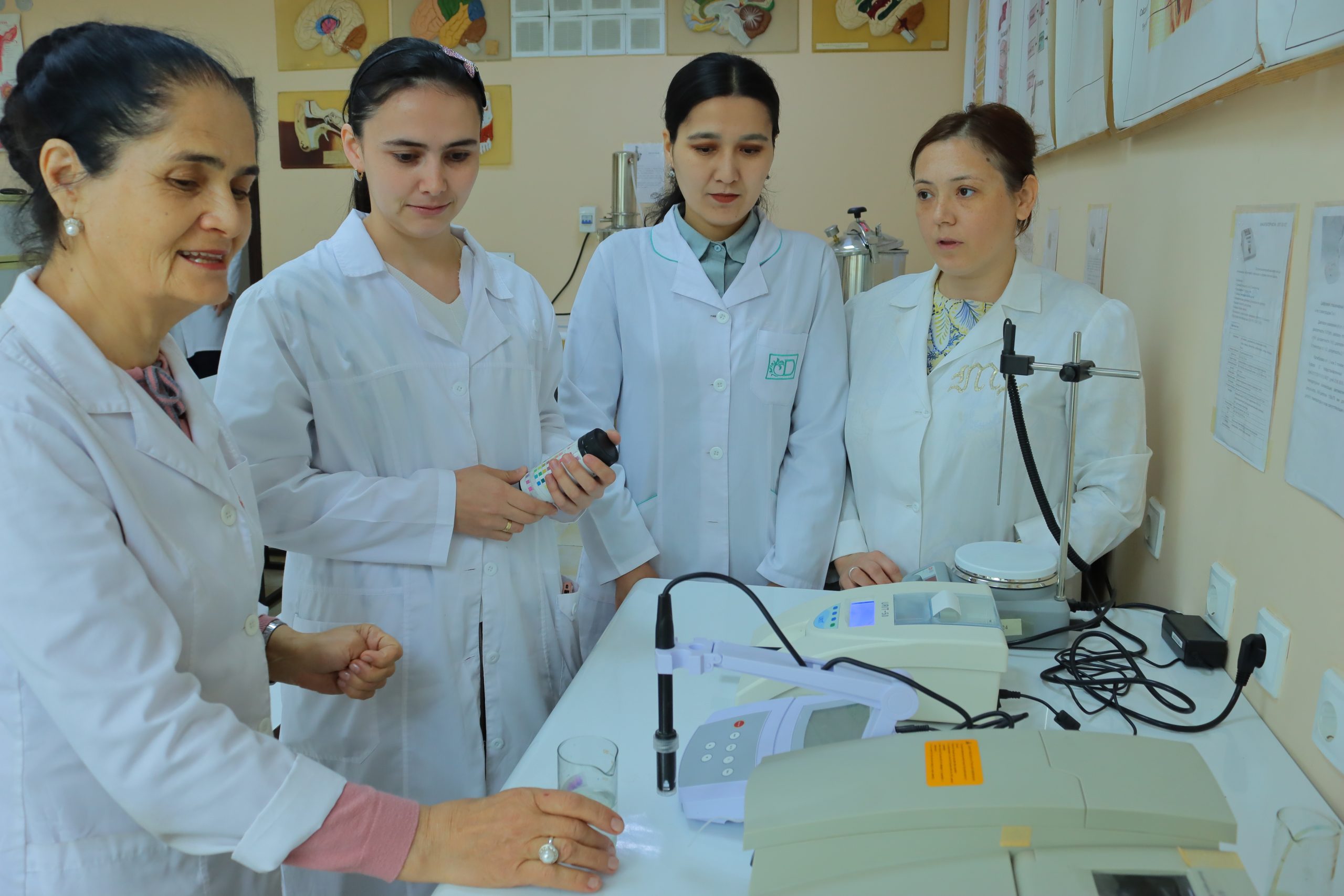
The Department of Biochemistry at the National University of Uzbekistan plays a vital role in advancing research and education in biochemical sciences. Established under the leadership of prominent scientists, it has evolved into a hub for biochemical research, particularly focusing on cellular and molecular biology, enzymology, and the biochemical regulation of vital processes.
The department has fostered collaborations with international institutions and provides a range of courses, from basic biochemistry to specialized topics like enzymatic catalysis and lipid biochemistry. Its ongoing research and educational programs are aligned with contemporary scientific challenges, including biotechnology and environmental biochemistry, equipping students with practical and theoretical knowledge in the field.
The Biochemistry Course under the Department of Biochemistry at National University of Uzbekistan is a comprehensive program that provides students with a solid foundation in biochemical principles and processes. The course covers various critical topics, including the structure and function of macromolecules, enzyme kinetics, and metabolic pathways. It also delves into cellular functions, focusing on how biochemical processes are regulated within cells.
Key topics include:
Protein Function and Enzyme Kinetics: Understanding how enzymes catalyze biochemical reactions and regulate metabolic networks.
Metabolic Pathways: Analysis of major metabolic pathways and their interconnections.
Biochemical Manipulations: Exploration of how mutations or drugs affect enzymes and pathways.
This course is designed not only to impart theoretical knowledge but also to develop analytical and problem-solving skills, preparing students for careers in life sciences research and biotechnology
Disciplines
| 1 | Biochemistry and Molecular Biology | The purpose of teaching the subject is to teach students the theoretical foundations of knowledge about biochemical processes in the body and the cell, the basic concepts and categories of biochemistry, the laws and principles of biochemistry at the level of the body and the cell, and the ability to apply them in practice. |
| 2 | Biology teaching methodology | The subject “Methods of Teaching Biology” provides students with theoretical knowledge, practical skills, a methodological approach to biological phenomena and processes, as well as the formation of a scientific worldview. |
| 3 | Enzymology | The aim of teaching the course “Enzymology” is to understand the role of chemical processes in the body and to study them using modern research methods. |
| 4 | Hormonal regulation of intracellular processes | The purpose of teaching the subject is the formation of fundamental concepts, knowledge, skills and qualifications based on modern information about the structure of hormones, properties, the course of life processes in living organisms (microorganisms, plants, animals, humans), mechanisms of regulation of activity, their importance in cell activity, unity anabolic and catabolic processes. |
| 5 | Functional biochemistry | The purpose of the subject is to teach masters the basic provisions, categories, concepts and foundations of functional biochemistry, for example, blood biochemistry, the role of blood in metabolism, muscle biochemistry, muscle function in energy supply, biochemistry of nerve tissue, the formation of nerve impulses and the biochemical basis of the transfer of nerve impulses. |
| 6 | Lipid biochemistry | The purpose of the subject is to teach masters the basic provisions, categories, concepts and foundations of functional biochemistry, for example, blood biochemistry, the role of blood in metabolism, muscle biochemistry, muscle function in energy supply, biochemistry of nerve tissue, the formation of nerve impulses and the biochemical basis of the transfer of nerve impulses. |
| 7 | Enzymatic catalysis | The purpose of the subject is to teach students the basics of enzymatic processes, which are the foundation of biotechnological industries of any complexity, as well as in the formation of the skills to apply them in practice. |
| 8 | Basics of glycobiology | The purpose of the subject is to teach students the basic provisions, categories, concepts and fundamentals of glycobiology (glycoproteins, glycans, immunoglobulins and other components of complex carbohydrates), as well as in the formation of the skills of their application in practice. |
| 9 | Biochemistry of vitamins | The purpose of the subject is to teach students the basic provisions, categories, concepts and fundamentals of the biochemistry of vitamins, as well as in the formation of the skills to apply them in practice. |
Team Members
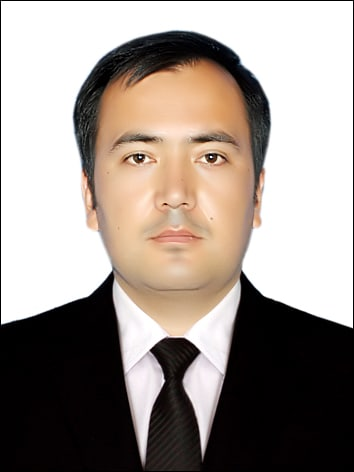
Qoziev Sherali
Dissertation topic: Age-related changes in the functional state of rat mitochondria and the effect of herbal preparations on them

Dalimova Surayyo

Abdullaeva Muborak
Photo-Gallery
ACADEMICIAN OF NUU PERFORMED AN INNOVATIVE PHYSIOLOGICAL IN VIVO SURGERY ON THE RABBIT INTESTINE
The next session of the “Young Physiologists of Uzbekistan” circle, organized by Academician B. Zaripov at the “Human and Animal Physiology” department of the Faculty of Biology, was held in the framework of “Biochemistry Course” at the National University of Uzbekistan.
In this exercise, which was organized in cooperation with the Ministry of Higher Education, Science and Innovation, the Ministry of Health, Tashkent Medical Academy, laboratory animals used by the academician in physiological experiments, as well as preparation for surgical operations, taking biomaterials from the animal body through chronic in vivo fistula , information was given on current topics such as the study of physiological indicators at the molecular level.
The guarantee of health is the physiological activity of the members of the immune system, and members of this system play an important role in the fight against all iodine substances in the body. The field of immunophysiology is the main direction in the study of physiological processes in the fight against diseases in the body, which is currently developing very rapidly. As a result of the development of immunology on the basis of modern research, many diseases are being diagnosed.
Vaccination of a number of infectious and other diseases, whooping cough, poliomyelitis, whooping cough, rabies, measles, rubella, inflammation, measles, hepatitis, chronic hepatitis, anemia and a number of other diseases. and was treated with immunosuppressive drugs.
All diseases are caused by a violation of the immune system in the body. As a result, drastic changes occur in some internal organs. This immune system disorder also affects blood-forming cells.
Not only the university, but also representatives of neighboring countries such as Kazakhstan, Kyrgyzstan, Tajikistan, Turkmenistan, as well as students of the Faculty of Biology of the Belarusian State University, specialists of the University of England, and physiologists of the USA participated online in this circle.
Video-Gallery
