




Strengthening Collaboration Between NUUz and Indian Universitie
The National University of Uzbekistan (NUUz) is actively engaged in a strategic partnership with several leading Indian universities, focusing on the critical issue of water resources management in arid and semi-arid regions. This collaboration has been marked by a series of scientific exchanges and seminars, where experts from both countries come together to address the challenges of water scarcity, drought, and climate change
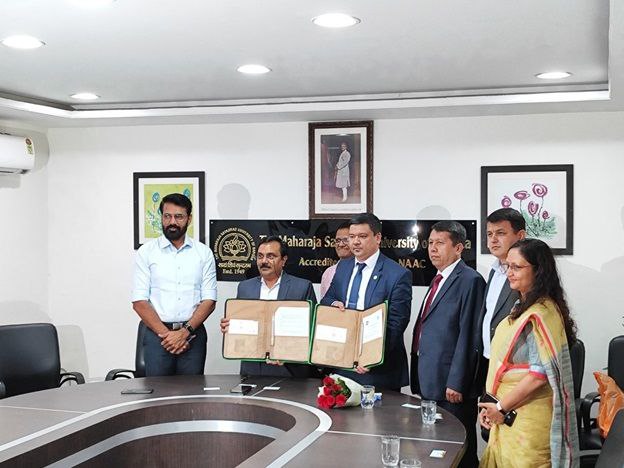
Vice Chancellor, MS University, Baroda
Associate Professor in Civil Engineering – The Maharaja Sayajirao University of Baroda
Associate Professor at NUUz
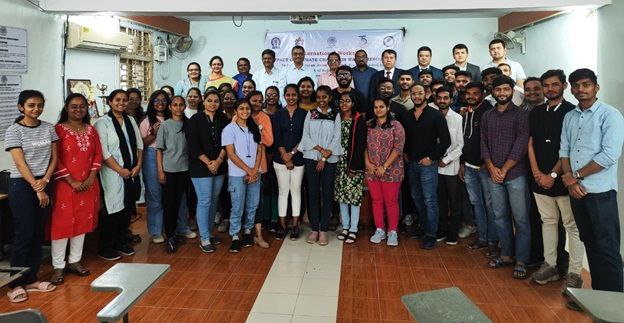
A significant milestone in this collaboration was the participation of NUUz faculty members in a scientific seminar organized at Maharaja Sayajirao University of Baroda in India. This seminar was conducted under the framework of the project titled “Assessment of the Impact of Dams and Climate Change on Water Scarcity and Drought in the Basins of Arid and Semi-Arid Rivers of Uzbekistan and India,” identified by project number UZB-IND-2021-89.
Project Objectives:
The event centered around three key subthemes: Hydrogen Energy, Green Hydrogen, and the General Clean Energy Transition and Policy. It brought together prominent government officials at local, state, and federal levels, as well as experts, researchers, clean energy policymakers, and stakeholders from India, Pakistan, and other parts of the world.