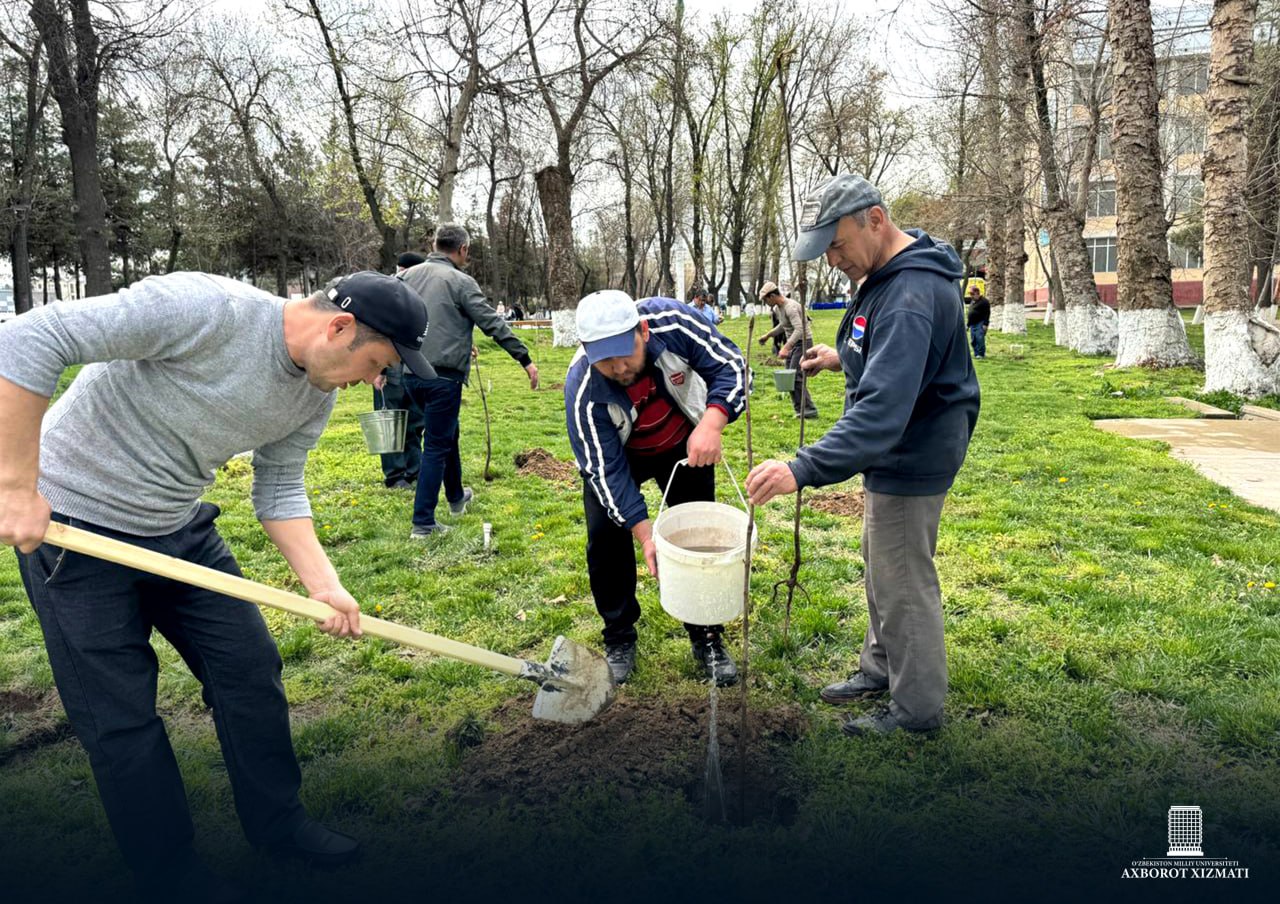
The National University of Uzbekistan (NUUz) has embarked on an ambitious and environmentally crucial project aimed at combating water scarcity and promoting sustainable land management. Recognizing the increasing challenges posed by climate change and the pressing need for efficient water use, the university has launched a comprehensive 10-year plan to plant drought-tolerant trees across its campus and surrounding areas.
The 10-Year Plan
The university’s plan includes several key components:
Species Selection: NUUz has identified a variety of drought-tolerant tree species suitable for the local climate, including native and non-invasive exotic species.
Planting and Maintenance: Over the next decade, thousands of trees will be planted on campus and in nearby communities. The university will also establish a maintenance program to ensure the trees’ long-term health and survival.
Research and Monitoring: The initiative will be supported by ongoing research to monitor the growth and health of the trees, assess their impact on the local environment, and optimize planting strategies.
Community Involvement: The project aims to engage students, staff, and the wider community through educational programs and volunteer opportunities, fostering a culture of environmental stewardship.
Expected Outcomes
NUUz’s initiative is expected to yield multiple benefits, including:
Water Savings: By replacing water-intensive landscaping with drought-tolerant trees, the university will significantly reduce its water usage.
Biodiversity Enhancement: The introduction of diverse tree species will enhance local biodiversity and provide habitats for various wildlife.
Climate Resilience: The trees will help to mitigate the effects of climate change by sequestering carbon and reducing urban heat islands.
Educational Opportunities: The project will serve as a living laboratory for students and researchers to study and promote sustainable environmental practices.

The Goal: Water Conservation and Environmental Sustainability
Central Asia, including Uzbekistan, faces significant water resource challenges. The region’s arid climate, combined with the impacts of climate change, has led to recurring droughts and water shortages. In response, NUUz’s plan focuses on planting tree species that require minimal water, thereby conserving this precious resource while simultaneously providing environmental benefits.