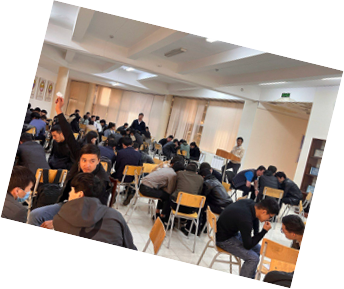
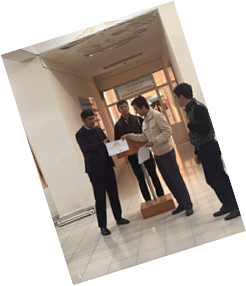
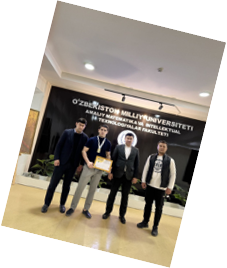
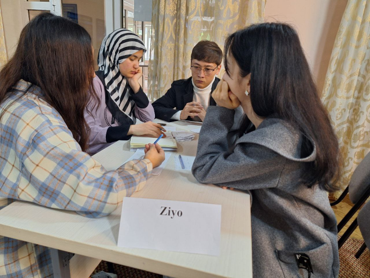
The National University of Uzbekistan recently hosted a groundbreaking conference and workshops on Mathematical Modeling for Sustainable Development. This event brought together leading experts, researchers, and policymakers to explore the intersection of mathematics and sustainability, with a focus on finding innovative solutions to pressing global challenges.
The conference kicked off with a keynote address by Dr. Alisher Vohidov, a renowned mathematician and professor at the university. Dr. Vohidov highlighted the importance of mathematical modeling in shaping sustainable development policies and strategies. He emphasized the need for interdisciplinary collaboration and data-driven decision-making to address complex issues such as climate change, resource management, and urban planning.
Throughout the workshops, participants engaged in hands-on activities and discussions to deepen their understanding of mathematical modeling techniques and their applications to real-world problems. They explored case studies from different regions and industries, showcasing the potential impact of mathematical models in driving sustainable development outcomes.
One of the key takeaways from the event was the importance of incorporating uncertainty and variability into mathematical models to account for the complex, interconnected nature of sustainability challenges. Participants learned how to use advanced modeling tools and techniques to analyze data, identify trends, and make informed predictions about future scenarios.
The conference also featured a panel discussion with representatives from government agencies, non-profit organizations, and private sector companies. They shared their experiences in applying mathematical modeling to inform policy decisions, optimize resource allocation, and drive innovation in their respective fields.
Overall, the Mathematical Modeling for Sustainable Development conference at the National University of Uzbekistan was a resounding success. It showcased the power of mathematics as a tool for positive change and inspired participants to think creatively about how they can contribute to a more sustainable future.
As we look ahead, it is clear that mathematical modeling will continue to play a crucial role in shaping sustainable development initiatives around the world. By harnessing the power of data and analytics, we can unlock new opportunities for growth, resilience, and prosperity for all.